


Forests
I love trees. They seem like fellow creatures, the most humanoid of plants. There’s a huge range of sizes, from a tiny seedling, with the volume of a mouse embryo, up to the giant sequoia, which displaces the same space as 20,000 humans.
Trees are not sentient, so they don’t have moral and ethical standing. Under the standards elaborated in my book Earthling, only animals with neurons have intrinsic moral worth, a right for their interests to be taken into account when humans are deciding environmental issues. It’s OK for us to treat trees instrumentally, but they matter a lot to humans in both practical and emotional ways.
Big trees are the elephants or whales of the plant world, the quiet behemoths. They evoke in me the calm I get from majestic, peaceful animals. I especially like old-growth forests of large trees like redwoods or sequoias with limited underbrush, areas that feel sacred, like cathedrals when I walk through, as I did recently in the redwood parks near Mendocino. This is the configuration native Americans aimed for when they managed their forests with fire.
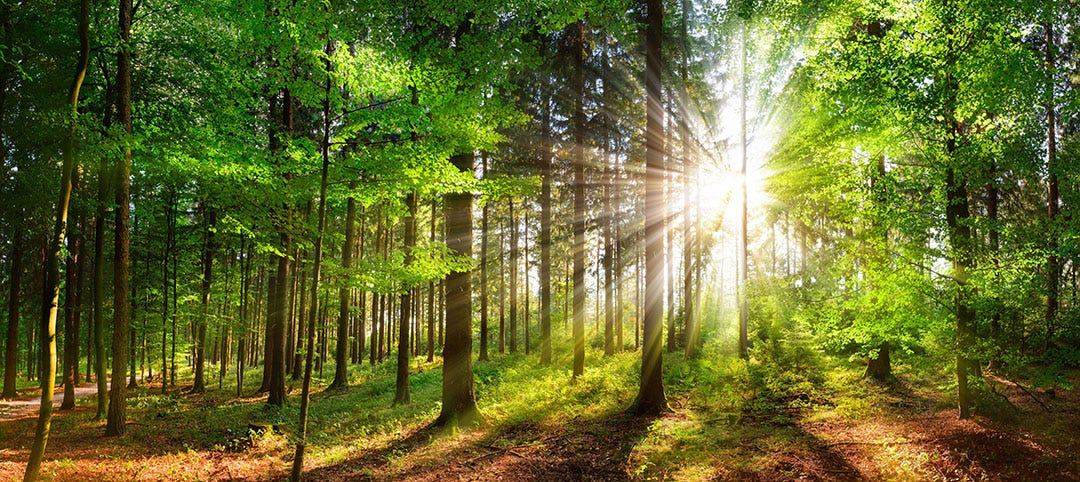
Though there are over 300 trees on Earth for every human living now, they are declining in number. We’ve lost 45% of the Earth’s trees since we began cutting them down a few millennia ago.
Two extraordinary recent novels stress the importance of forests. The first is Annie Proulx’s Barkskins, a 700-page historical dramatization of three hundred years of logging, focusing on the US and Canada. It starts in Quebec in 1693 with the arrival of two barkskins, indentured servants contracted to help cut timber and clear the land in New France. The novel follows their descendants, who are partly native-american since one of the two men marries a Mi’kmaq woman.
For the first couple hundred years, the vast forests of North America seemed inexhaustible, providing lumber for constructing buildings and ships when timber was rare in Europe because of that continent’s long-depleted forests. Timber companies boomed during this period, amassing huge holdings of timberland. Their operations gradually moved west as eastern forests were destroyed. The book ends with a group of forest activists working to replant and restore forests in modern times.
The other important recent forest-related novel is Richard Powers’ The Overstory, which won the Pulitzer Prize for Fiction in 2019. It recounts the history and backstories of a group of tree activists, who eventually become tree-sitters and monkey-wrenchers. An explosion kills one of them when they are torching construction heavy equipment and the group goes to ground. Years later, two of them are caught and given long prison terms. The novel finishes in a minor key, as the activists reflect on what they have and have not accomplished.
According to Jaboury Ghazoul’s Forests: a Very Short Introduction, an excellent guide to the forest world, deforestation in Europe started in Paleolithic times and accelerated when iron axes and plows made clearing forests for agriculture easier. By 500 BCE much of Europe’s forest was lost, and by 1500 CE Europe’s remaining forest was fragmented and depleted. In other words, most of the old-growth forest had disappeared.
Ghazoul debunks, to a degree, the concepts of old growth and succession. Succession is the sequence of forest states that follow a significant disturbance like a fire or clearcutting that destroys a forest. The sequence starts with plants that can spring up quickly in post-disturbance conditions. Longer-lived trees will eventually compete for canopy space and crowd out most of the pioneers until a relatively stable state is reached, a state called “old growth.”
Ghazoul’s criticism of the concept of old growth is that forests are never stable; they’re always changing, even without any human interference. Some “old growth” forests are structurally complex, with many types of trees interacting with features in the landscape, and other old-growth forests tend more toward dominance by one species of tree. Even without human interference there are many types of disturbances that change a forest, such as single-tree falls, fire, drought, and insects.
Ghazoul provides the example example of Lady Park Wood in Wales, a forest that has been left undisturbed by humans since 1902. In the 1970s it consisted mostly of beech trees, but drought, disease, animals, and insects killed many of the them. The forest is now destined to become a predominantly ash and lime forest.
Still, the forests of the new world must have looked like old growth to immigrants from Europe. The contrast between Europe’s depleted forests and the millions of acres of huge, relatively undisturbed trees in America when the barkskins arrived in Canada, must have been astonishing.
Forests are primarily classified by latitude: tropical, temperate, and boreal. Temperature is the main feature distinguishing these forest types, but the amount of precipitation plays an important role as well.
Tropical forests extend from the equator to roughly 23.5° N or S latitude. This band includes much of Mexico, Central America, and Brazil, a bunch of countries in Africa, Indonesia and the Philippines.
Temperate forests are between 23.5° and 50° N or S latitude, and include most of Europe, southern Russia and the US, southern Canada, Australia, and Southern Africa.
Boreal forests extend from 50° to 70° N and S latitude, including northern Canada and Russia, southern Greenland, the Scandinavian countries. Few trees grow in latitudes closer to the poles than 70°.
Generally speaking, forests nearer the equator have more species variety in both plants and animals. A hectare (roughly 2.5 acres) of tropical forest may contain as many as 675 species of trees and thousands of species of insects. At the other extreme, I just returned from a road trip on the Gaspé peninsula, where the boreal forests mostly had just two types, light and dark green, birch and spruce-fir conifers.
Trees and Climate Change
Forests contain around 45% of the carbon that is stored on land, about 25% in tropical forests, 12% in boreal forests, and 8% in temperate forests. The carbon is in the tree biomass and the soil, the ratio between the two varying according to the type of forest.
When trees grow they incorporate carbon dioxide through photosynthesis, reducing global warming. The process is reversed when wood decays or is burned; the carbon dioxide is released, increasing the concentration of greenhouse gases in the atmosphere.
According to the IPCC AR6 WGIII report, net emissions from agriculture, forestry and other land uses (AFOLU) are highest by far in Africa and Latin America. This is mostly because those regions contain the most tropical forests. Net AFOLU emissions are close to zero in North America and slightly negative in Europe.
Deforestation is most climate-important for tropical forests, such as the Amazon River basin, and Indonesia, because tropical forests sequester the most carbon. There, forests are being cut down, often illegally, for agriculture and oil production. Reforesting those areas could provide significant climate mitigation.
We in the US and Europe should be doing our part to fight climate change by managing our forests to optimize for carbon storage and sequestration. We can do this by allowing forests to grow to maturity wherever possible, by lengthening rotation periods for timber that is grown for harvest, and by practicing continuous-cover forestry, avoiding clearcutting, which avoids exposing the forest floor to direct sunlight and erosion. Unfortunately, the current federal administration does not care about climate change, so it is not requiring climate considerations to be taken into account when developing forest plans.
Forest fires are bad for the climate because they release massive amounts of carbon dioxide. But the threat of fire provides logging companies with a rationale for increased logging to protect against fire, and their practices, such as clearcutting, are sometimes even worse than fires. Using wood from forests for construction or furniture—uses that don’t burn it or allow it to decay—is good for climate, but uses such as selling wood pellets to be used as fuel are climate-harmful.
Disease and drought are also killing a lot of trees. I often go to the annual Yosemite Conference on Environmental Law and drive up through the Sierra National Forest. Huge swatches of trees are dead there. 102 million trees have died in the Sierra Nevada in the last couple decades. The causes are linked to the climate crisis.
Drought, fueled by global heating, weakens trees. A terrible drought in California between 2012 and 2015 resulted in low precipitation, depleted groundwater and coincided with a period of increased warming, also caused in part by climate change. Bark beetles then overwhelmed the trees’ natural defenses. The dead trees provided fuel for a series of huge forest fires, which killed still more trees and released millions of tons of greenhouse gases.
According to Yale Environment 360, “bark beetles have ravaged 85,000 square miles of forest in the western United States—an area the size of Utah—since 2000. Pine beetles also have killed trees across roughly 65,000 square miles of forest in British Columbia.” Climate change promotes beetle infestations by weakening trees, and by increasing temperatures that increase the beetles’ range.
Forests will eventually adapt to the new climate. In pre-industrial times, going back 10,000 or so years, Earth’s climate was stable. Let’s call that state “S1.” We’re now adding greenhouse gases to the atmosphere at an unprecedented rate, mostly by burning fossil fuels. As a result, energy is building up in the climate system and atmospheric temperatures are increasing. I presume that climate impacts will eventually get so bad that we stop our greenhouse-gas emissions. At that point the climate will stabilize at a new level, which we’ll call “S2.” Let’s assume this happens in the year 2100. At that point, average temperatures will be well above pre-industrial levels. My guess is the increase will be about 3.5°C. The impacts, in increased heat waves and storms, droughts, sea-level rise, to name just a few, will be huge. S2 will prevail for thousands of years as the state of the Earth, unless we magically figure out a way to remove CO2 from the atmosphere.
Forests will adapt to S2 on a relatively fast time scale. Thousands of species of plants and animals will go extinct in S2. Trees will move up in elevation and toward the poles where they can. Those who don’t move fast enough will die off. Humans can help with the process by replanting certain areas with trees more suitable for the new climate, but we’ll often guess wrong about what will work in a particular locale. S2 will result in a major reconfiguration of forests throughout the world, but they will arrive in a new state, as stable as in pre-industrial times, in a few hundred years.
Let’s try to help our trees. They add a lot to our life. The best thing we can do for them is to stop burning fossil fuels, as soon as we can.