


The Evolution of Computer Architecture
Fifty years ago I was a young programmer developing systems for big New York banks like Citibank and Chase. Back then, big systems ran on mainframes like the IBM 360 and smaller systems used so-called minicomputers like the PDP-11. Minicomputers were refrigerator-sized and needed to be located in a machine room near the terminals through which users interacted with the system. There were no personal computers yet, and networking wasn’t widespread.
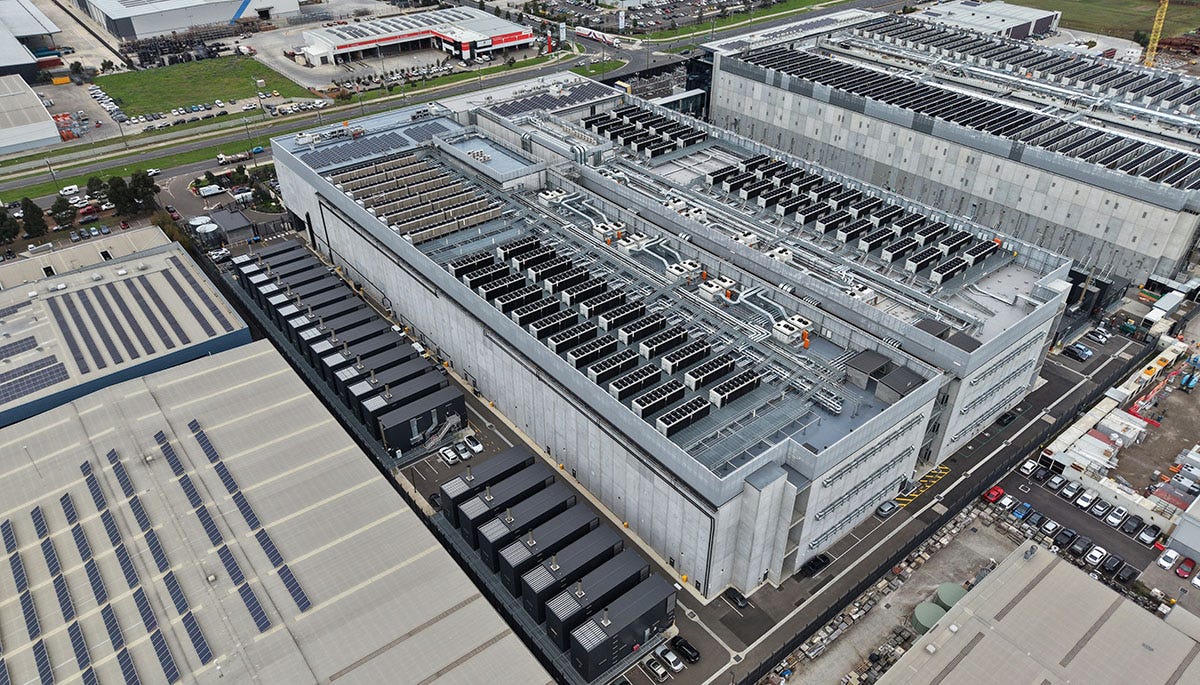
When I got out of software development twenty years ago to become an environmental lawyer, a lot had changed. PCs were everywhere in the banks, used as terminals for all the banks’ applications. Banks ran their own private networks using Internet technology, and the mainframe and minicomputers the applications ran on could be located anywhere. They were usually in private data centers owned by the banks. Most applications still had their own dedicated computers. It took a fair amount of effort to configure these computers so they had the right capacity for their applications, and to connect them to other systems with which they needed to communicate.
Now, Gartner estimates that over 95% of new applications are deployed “in the cloud.” Companies like Amazon Web Services, Microsoft Azure, and Google Cloud Platform provide generalized, fungible computing services, hosted in their data centers. When applications written to run on these services are deployed, the banks don’t have to set up dedicated computers to run them. They can be easily scaled up as needed. And the computing resources—computers, storage, networking—can be shared with other applications. This is all made possible by fast and universally available networking, mostly via the Internet.
We’re moving toward a world where small applications like word processors and spreadsheets run on end-user devices—PCs, tablets, and smartphones—while larger applications run in the cloud, on large computers in data centers. These two sets of computer applications, on the local device or in the cloud, use approximately equal amounts of electrical power.
Graphics-processing units (GPUs) are being added into the cloud computing mix. Traditionally, computing was done by central-processing units (CPUs), executing a single thread: one instruction after another. For the first couple decades, CPU chips got faster due to increased miniaturization on the chips, but at some point CPU manufacturers started putting multiple processors on each chip, each processor, or core, executing an independent instruction stream. The M5 chip in the Mac computer on which I’m writing this has 18 CPU cores.
Graphics cards were developed in parallel with the increase in multi-core CPU architecture. Their original purpose was to provide specialized computational resources for rendering images in video games. They are massively parallel—the GPU on my desktop computer, an Nvidia RTX 4590, has 21,760 CUDA cores that all operate in parallel. In the early 2000s it was discovered that the GPU architecture was also useful for things other than graphics processing. Being able to do 20,000 things in parallel, even if the things were relatively simple, was very useful for artificial intelligence.
Data centers traditionally hosted CPUs, not GPUs. They would be full of rack-mounted servers with high-end CPU chips like Intel Xeon or AMD EPYC.
AI applications need GPUs. Nvidia packages 36 Grace CPUs and 72 Blackwell GPU units in an NVL72 server rack costing about $3 million, and requiring 130 kilowatts of power. The GPUs provide an immense amount of computing power for AI tasks, but require a lot of electricity. Computing capacity is measured in “FLOPS,” floating-point operations per second, but most data centers are rated according to the power they consume, which can be translated into computing capacity. A 100 megawatt (MW) data center can host around 700 NVL72 servers, for example.
Data Center Growth
Conventional data-center computing using CPUs is growing about 7% per year, but AI computing using GPUs is growing much faster. AI capacity can be measured in H100 equivalents—the number of Nvidia H100 GPUs that would provide the capacity. Nvidia has sold about 30 million H100s, and AI capacity in data centers is currently growing by a factor of 3 every year.
A McKinsey report projects overall data-center demand growth of a factor of 2.6 between 2025 and 2030, with AI accounting for roughly three-quarters of this growth. The report estimates that AI inference will overtake non-AI computing loads by 2029.
In my opinion, this growth will continue for a few years, then level off. AI is useful for a lot of things. AI inference can significantly help with research of all kinds, and is widely used even now. It can greatly speed the creation of many types of work product: text, images, videos, and music. Agentic AI, where AI “agents” do tasks formerly done by humans, will automate processes in many companies, big and small, and is just getting off the ground. AI is not a bubble and will not collapse and go away. But we need to control and minimize its environmental impacts. This column will focus on these impacts, and not on the other potentially negative impacts of AI, such as taking people’s jobs or getting out of control and taking over the world.
Data-Center Environmental Footprints
The major environmental impacts of data centers are on land, electricity, and water. As we will see, the most important impacts are on energy. A project’s energy impacts are strongly related to its climate (greenhouse-gas) impacts. Most US states require the preparation of an Environmental Impact Report for large projects like data centers.
Land Impacts
Land-use planning is usually the province of a local planning commission, confirmed by the city council or county board of supervisors. A document called the “general plan” controls land use in most jurisdictions. It is closely related to zoning, which should be consistent with the general plan. There are some areas (e.g. Houston) that have no zoning or land-use planning, but they’re rare exceptions in the US.
Data-center projects must generally be located in an area planned & zoned for industrial uses, but, frequently, project proponents can ask that the general plan and zoning be changed as part of the project approval process. The city council or board of supervisors will usually accede to this request if they are in favor of the project.
It’s not terrible living next door to a data center. They tend to have few employees, so there’s not much added traffic. Their noise level is usually pretty low outside the buildings, unless there are fossil-gas electric generators. Data centers emit just a small quantity of air pollutants. And they don’t take up a lot of land; they’re similar to warehouses in this respect. The impacts on neighbors during construction—digging with backhoes, trucks coming and going, putting up the buildings, moving in the equipment, hooking up the electricity and water—may be pretty significant, but those impacts are limited in time since data centers go up pretty quickly. The Colossus 1 data center near Memphis took only 122 days to construct.
Local environmental impacts increase considerably if there are “behind the meter” on-site fossil-gas generators providing electricity. These generators can be noisy. They emit CO₂, of course, which causes global harm but minimal local harm. They can also emit criteria pollutants like carbon monoxide and particulates, which harm air quality for the people living nearby.
Energy Impacts
The biggest impact from data centers comes from the electrical power they require. They tend to require so much power that they can’t just plug into the local electrical grid. If they could do that, and if the power they used came from renewable sources like solar or wind, data centers would have small energy impacts.
Data centers that need more power than they can get from the grid tend to rely on natural gas. Coal and oil are not economical as data-center fuel sources. Some data centers will be wholly powered by natural-gas generators, and some use such generators to provide backup power, in case the grid fails, totally or partially. Data centers can generate revenue of around $10 billion per GW per year, so the operators are under huge economic pressure to get them up and running quickly. Connecting to the electrical grid takes years in most places, but gas turbines can be located on-site much more quickly.
Let’s look at a couple of the largest data centers to see how they’re getting their energy.
SpaceXAI built two data centers, named Colossus 1 and Colossus, 2 near Memphis. Colossus 1 was built in 2024, with an initial capacity of approximately 100,000 NVidia H100 GPUs. It draws somewhere between 300 and 500 MW, with around 150 MW coming from the grid. (These figures are approximations and estimates, because SpaceXAI doesn’t release figures on its data-center energy consumption.) Electricity to augment the grid power comes from natural-gas turbines installed nearby, just for the project. SpaceXAI originally ran as many as 35 turbines without permits, but a lawsuit from the Southern Environmental Law Center caused them to get permits for 15 of them and remove the others. Colossus 1’s computing power is leased to the AI company Anthropic.
Colossus 2 is much larger. It contains around 325,000 GPUs, and expects to expand to about a million GPUs by the end of 2026. This will take about 1.2 GW of power, supplied by a custom fossil-gas power plant in nearby Mississippi. SpaceXAi is using it primarily to train Grok, its proprietary AI system.
According to The New York Times, the fossil-gas turbines for one or both of these data centers include repurposed jet aircraft engines. There is a backlog for purchasing new, relatively efficient, fossil-gas turbines for generating electricity, so some data centers are buying jet-engine turbines, which are more readily available, to get up and running fast. But, in addition to the CO₂, they emit when burning fossil gas, they emit more carbon monoxide and other conventional air pollutants at a much higher rate per kilowatt than the turbines that are designed for generating electricity. The use of these repurposed jet engines to power data centers should be prohibited.
The 1.2 GW Stargate data center, in Texas, will connect to the grid, but will also include significant on-site fossil-gas generation. Much of the grid electricity would come from renewable sources. The project is sited in an area that generates lots of solar and wind power. During normal operation after full build-out of the energy infrastructure, the project expects to get all its power from the grid, with help from battery backup. The fossil-gas generators will be initial used as a bridge to supply power while the grid interconnection is built out. After full build-out, they will be used, around 15% of the time, to fill in for local grid deficits. The local power supplier also has an agreement that the project will switch to 100% behind-the-meter gas power during grid power emergencies. This power setup is relatively good for the environment, but it would be better if renewable energy could be sufficient that the gas generators would be brought online only during a power emergency.
The Delta Gigasite in Delta, Utah, advertises itself as a “>10 GW AI infrastructure campus.” It will use 2.1 GW of on-site fossil-gas generation, 6 GW of solar from an adjacent facility, and has signed a memorandum of understanding with EnergySolutions to evaluate the possibility of generating between 2 and 10 GW of on-site nuclear power. Burning fossil gas to produce 2.1 GW will be very bad for the climate.
The data-center gold rush has resulted in a flood of speculative requests for grid power. According to Semianalysis, roughly a terawatt (TW, 1,000 gigawatts) of grid connection requests are outstanding for proposed data centers. The timeline from interconnection request to commercial operation now stretches to five years for most jurisdictions. This delay has pushed many data-center builders towards on-site fossil-gas generators, but the manufacturing backlog for those is growing. It currently stands at around 20 months.
There are about twelve thousand data centers in the world now, and they consume 1.5% of electricity globally, and about 4.9% in the US. According to a report from DataCenter Knowledge, annual data center electricity consumption will rise from 590 TW-hours in 2025 to 1,520 TWh in 2030. About a third of this power is used for AI tasks, and that share is growing.
We are in the process of upgrading the electric grid in the US to better accommodate renewable energy, connecting renewable energy sources to their customers. A 2024 Department of Energy synthesis estimated that transmissions within regions need to grow by over 60% and connections between regions need to double, by 2035. Storage needs to be added, to help balance supply and demand across the day.
Data centers may provide demand and financing for some of this work.
Data-Center Nukes
Some data-center operators are considering commissioning small modular nuclear reactors (SMRs) to provide dedicated on-site power. One big advantage of nuclear power is that its climate impacts are small, since it doesn’t involve burning fossil fuels.
Environmentalists’ objections to nuclear power in this context are similar to their objections to larger-scale nuclear power: (1) disasters at Three Mile Island, Chernobyl, and Fukushima show that large-scale nuclear disasters are possible; and (2) there is no safe way to dispose of still-radioactive nuclear waste. SMRs will produce substantially more nuclear waste per unit of generated power than traditional reactor designs.
In addition, SMRs are untested. They rely on new designs with no operating history. The federal government is trying to relax review and testing standards, to get SMRs deployed quickly. But we should insist on full safety and environmental review.
And many designs use High-Assay Low-Enriched Uranium (HALEU), which a recent paper in Science found suitable for making nuclear weapons. Security would need to be tightened considerably, and would add to the expense.
Data Centers and Climate Change
To stop the continuing increase in global temperatures, we need to stop burning fossil fuels. We’re not moving toward this goal in the US under the current federal administration, but we’ll get back to it in the future.
The end goal is to electrify pretty much everything that uses fossil power now: cars, trucks, and trains, home uses including space and hot-water heating and cooking, industrial uses such as cement and steel manufacturing. To do this we need to build out the electricity grid to connect new renewables sources—solar, wind, and geothermal—with customers, and to have sufficient storage to smooth out the peaks and valley in supply and demand.
Data centers can help push this project by seeking renewable power from the grid. It’s a plus that data centers are already electrified, but their increasing power demands work against the need to reduce demand for electrical power. We can reduce the amount the grid needs to be augmented by reducing our use of electricity and by making required uses more efficient. US demand for electric power has decreased by roughly seven percent from its peak in the mid-2000s, due to adoption of LED lighting, tighter appliance efficiency standards, rooftop solar, and stricter building codes, among other causes. These reductions not only contribute to lower greenhouse-gas emissions, but reduce the amount the grid needs to be expanded. Adding data centers to the demand mix fights against these efforts, even if all new data-center power comes from the grid.
But the use of fossil gas to power data centers is a much more significant climate impact. Unfortunately, according to a recent New York Times article, the vast majority of data center power in the US comes from fossil fuels. There should be a prohibition on building new fossil-fuel infrastructure in the US, but the current administration is going all-in to promote fossil fuels. These efforts send us backward in our climate efforts, and will be hard to reverse in the future. Once a data-center is in operation with electricity generated by burning fossil gas, it will be difficult to force it to switch to renewable power. But, as discussed below, even if the federal government is promoting fossil fuels, state and local governments can often prohibit the use of new fossil infrastructure to power data centers.
Water Impacts
Almost every joule of energy that powers a data center ends up as heat in the data center. A gigawatt data center produces ten times as much heat as a 100-megawatt one. Significantly, going from CPUs to GPUs has increased the density of heat production by almost an order of magnitude: a rack containing servers with CPUs might requires around 20 kilowatts of power, while an Nvidia NV72 rack requires 130 kilowatts. This heat must be removed, to keep the computer equipment in the racks at the right operating temperature.
A number of factors go into deciding where to site data centers: local politics, the availability of robust high-speed internet connections, water, and electricity, and the local climate. Lower humidity and lower temperatures make it cheaper to cool, and the cooling will use less water.
Most data centers are cooled by heat pumps—refrigerators, essentially—that transfer the heat to water, which is then evaporated in huge cooling towers.
According to Rashmi Nair’s excellent book, Data Center Cooling (2026), “a hyperscale data centre operating at 100 megawatts of IT load might evaporate 5 to 10 million gallons of water per day in a warm climate, depending on the wet bulb conditions [i.e. humidity and temperature] and the design of the cooling system.”
Using this much water may or may not be a major impact, depending on the local water situation. Some places in Florida or Quebec, for example, have plenty of water available, much more than can used for human consumption, and using 10 million gallons per day to cool a data center wouldn’t cause much harm. But in many places, especially in the western US, water is a critical resource.
For example, Project Matador, in Carson County, Texas, gets its water from the City of Amarillo’s municipal water system, which, in turn, draws 87% of its supply from groundwater wells in the Ogallala Aquifer. This aquifer is a fossil-water resource; extraction, mostly for agriculture, greatly exceeds replenishment from precipitation. The developer claims that the data center will run dry most of the year, and rely on evaporative water cooling primarily during external heat peaks, but the project may still significantly contribute to the depletion of the aquifer, depending on how much water it ends up using each year.
How to Fight Data Centers
Data centers can be located in many places, and their environmental impacts depend heavily on their location. In environmental permitting we should insist that data centers don’t use fossil-fuel energy, and don’t unduly tax local water resources.
Polls conducted in 2026 show that a strong (3:1) majority of the US public opposes building new data centers in their communities. The reasons for this antipathy are (1) fear of higher household electrical bills, (2) water depletion and environmental strain, (3) local quality-of-life and land use disruption, (4) distrust of tech companies and lack of local say, and (5) skepticism about promised economic benefits. But, depending on the local tax regime, data centers can provide substantial tax revenue to their city or county. In Loudon County, Virginia, for example, home to the world’s densest data-center hub, data centers provide between 38% and 45% of local tax revenue, though they occupy only 4% of commercial land-parcel real estate. Missing from the list of reasons most people oppose data centers is the reason I think is the most important: their climate impacts.
It’s important for those fighting approval of data centers to think strategically. I believe that the data centers the big AI companies want to build will be built somewhere, because the economic incentives are so high and the siting choices are pretty broad. “Leakage,” in a climate context, refers to an increase in GHG emissions outside a regulation’s coverage that is caused by the regulation, and offsets some or all of the emissions reductions achieved within its coverage. For example, if a state regulates cement production to require lower GHG emissions, the cement manufacturer might move to another state to continue producing high-GHG cement. This is what will happen when laws and regulations prohibit a data center in one location: it will be sited elsewhere.
A data center’s climate impacts—emitting GHGs from the burning of natural gas to generate electricity to power the data center—will affect everyone on earth, not just locals. Even if it results in leakage, we must try to prevent the powering of data centers with fossil gas. It’s too big a step backwards to build gas infrastructure for a GW datacenter, which uses enough electricity to power 850,000 average US homes.The infrastructure and gas combustion will likely remain in place for decades, impeding our climate progress.
We should also deny approval for data centers that use substantial amounts of water for cooling, when the local water supply is not abundant and sustainable.
Those who want to fight the approval of data centers in their communities should concentrate their efforts at the state and local levels, because the US federal government is, for the moment, touting and promoting data centers, and actively removing barriers to their construction.
On July 23, 2025, President Trump issued Executive Order 14318, “Accelerating Federal Permitting of Data Center Infrastructure.” This EO directs federal agencies to streamline permitting reviews, provide financial support, and use federal land for developing data centers. Other executive orders promote the development of fossil-fuel infrastructure. The National Environmental Policy Act (NEPA), which requires the preparation of environmental-impact statements for major federal projects, has been greatly weakened by this administration, so it no longer provides a viable legal path to stopping environmentally egregious projects like data centers with their own bespoke fossil-gas plants. It will be difficult to fight data-center approvals using federal law.
But there’s a lot that can be done to fight data centers at the state level, depending on state laws governing energy use and environmental review. The actual data-center approvals are done mostly at the local (city and county) level, as discussed below. Energy permitting, though, is usually the province of the state energy commission. When a utility builds a new power plant, energy-commission approval is generally required. But when the data-center operator is building the power plant, and the plant doesn’t provide power to the public or connect to the grid, energy-commission approval is required only in some states. In the right circumstances, lobbying the state energy commission can be an effective tool to stop a data center, or force it to be more environmentally friendly.
Lobbying state legislatures to tighten up regulation of data-center power plants can also be fruitful. California, for example, recently passed several data-center bills. They restrict the amount of data-center interconnection cost that utilities can pass on to their customers, require data-center operators to provide many types of information, including energy use, to the California Energy Commission and require them to disclose their water supply and water use. They also prohibit the use of exemptions to the environmental review law for data-center projects, so those projects must undergo full environmental review.
In cities and counties with standard land-use laws requiring general-plan land-use designations and zoning, the local agency (the city or county) can prohibit data centers in the general plan and zoning code. These laws allow “uses” such as residences, churches, and data centers to be restricted to certain zones or prohibited outright. Many local agencies do not allow houses of prostitution or slaughterhouses, and they could treat data centers the same way. In states like California that allow local initiatives, such a ban could be enacted directly by the citizens in an election, if the city council or board of supervisors can’t be persuaded to do so.
The other extreme occurs in jurisdictions where there is no zoning (e.g. Houston), or where the zoning is data-center friendly. In some places, data centers are allowed “by right” under the zoning, meaning there is no planning-level review and no environmental review. In most jurisdictions, where data-center approvals are discretionary, the local agency must undertake a review that usually includes an environmental impact report. This process provides opportunities to comment on the proposal, to persuade local officials to deny the project application, and, in some cases, to file a lawsuit on the grounds that the approval process or environmental review violated the law.
What Can You Do Personally to Help?
According to the International Energy Agency AI 2026 Report, the efficiency of processing AI queries is improving rapidly. A simple text query now typically consumes less electricity than running a television over the same period of time. But this efficiency improvement is offset by the increase in the complexity of AI tasks. Inference chains are getting longer as AI does deeper research. AI is being asked more and more to generate images, audio, and video, tasks which take much more processing than simple queries. And agentic AI—AI agents undertaking independent tasks for users—is just getting started. It will potentially use a great deal of computing resources.
According to the U.S. Energy Information Administration, the average U.S. household uses about 10,500 kWh of electricity per year, or about 1.2 kW of average continuous power. Google says that a typical text query to an AI model like Gemini uses about 0.3 data-center watt-hours. 10 such queries per day for a year would consume 1.1 kWh, which is about a hundredth of one percent of a household’s yearly electricity usage. Some queries that require a lot of reasoning can use 10 times as much energy.
Answering AI text queries uses several times more electrical power in the data center than responding to a traditional search request. But using AI to generate images, audio, or video can take orders of magnitude more computing resources and, hence, power. Generating a video can take upwards of 100 Wh, for example. Individuals should be cognizant that querying AI systems uses scarce environmental resources and be sparing in their use of image- or video-generation tools that use large amounts of computing resources and, hence, electricity.
Individuals can also keep an eye on local data-center permitting. As an environmental lawyer I’ve had many clients who started informal groups to successfully oppose projects in their neighborhoods using advocacy at the local level and legal tools like the California Environmental Quality Act (CEQA). In my view, data-center projects with significant local impacts on air pollution, water, or traffic, and projects that are powered by fossil energy are fair game. They should be fixed or located elsewhere.